














Key takeaways
- You can take Wegovy (semaglutide) in carry-on luggage when flying, but you’ll need to declare it at security for screening.
- Some countries limit the amount of medication you can bring within their borders.
- You can keep Wegovy at a temperature of 46°F to 86°F (8°C to 30°C) for up to 28 days if the cap has not been removed.
Wegovy is a prescription weight loss medication that comes in single-use injection pens. For it to work effectively, you need to store Wegovy properly. Keeping Wegovy in carry-on luggage or using an insulated travel case can help protect the medication while you’re traveling.
This article discusses ways to store and transport Wegovy safely when traveling, how to take Wegovy through security checks, and what to do if a pen malfunctions or you miss a dose.
Wegovy has other uses besides weight loss. For more information, see this Wegovy overview.
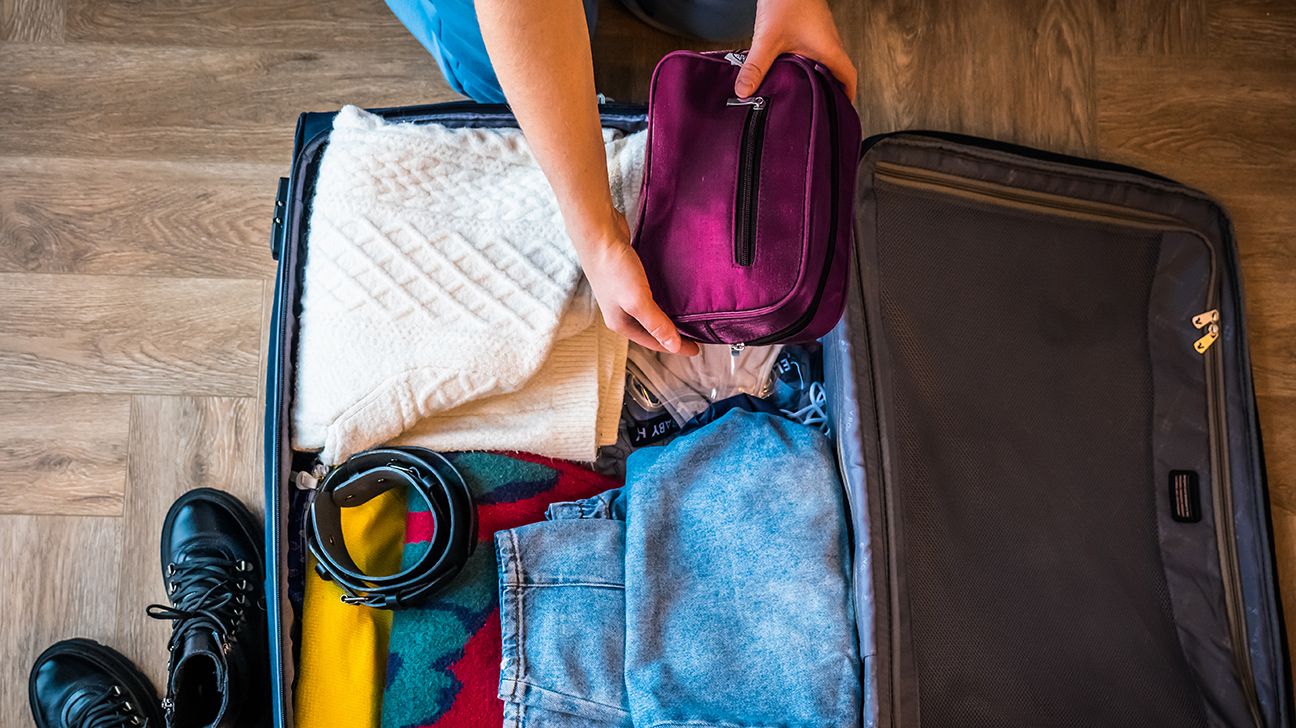
If you’re flying, you can bring Wegovy on the plane. But you’ll need to declare it at the Transportation Security Administration (TSA) checkpoint for security screening.
You can keep Wegovy in carry-on luggage. You may want to use a thermal or insulated case to keep the drug within the recommended temperature range. (For more information, see the “How long can Wegovy be out of the fridge?” section.) Do not place Wegovy next to an ice pack, as it may freeze.
Checked bag or carry-on?
When flying, keep Wegovy in carry-on luggage rather than checked luggage. This makes it easier to maintain the temperature of the medication. Checked bags may be exposed to extreme temperatures, which can damage medication or make it less effective.
Keeping Wegovy in carry-on luggage also reduces the risk of losing the medication if your checked luggage goes missing.
Getting Wegovy through TSA
The TSA allows necessary medications greater than 3.4 ounces (100 milliliters) in carry-on luggage. It also allows injectable medications in carry-on luggage, but those need to go through standard security screening.
You’ll need to declare any medication you have in your carry-on luggage at the checkpoint. Then, you’ll need to remove the drug from your bag for separate screening, along with any cooling packs or related medical accessories.
To help the security screening process, TSA recommends clearly labeling medication. It may help to leave Wegovy in its original packaging with the prescription label on. (Be sure to check that the name on the drug label matches the name on your ID and boarding pass.) And while it’s not necessary, it may help to carry a doctor’s note or your prescription with you.
Traveling internationally with Wegovy
Before traveling internationally with Wegovy, consider checking with the embassy of the country you’re visiting for its medication regulations.
Some countries limit the amount of medication you can bring within their borders. For instance, some countries allow a 30-day supply of medications. Others, such as the United Kingdom, may allow a 3-month supply. These countries may also require certain documentation, such as a medical certificate, so it’s important to check.
You may want to talk with a healthcare professional a month or more before traveling internationally to discuss any concerns about traveling with Wegovy. It’s also important to check whether your insurance provider will cover the full supply you’ll need while you’re gone, especially if you’re traveling for more than 30 days.
If you’re traveling to a different time zone, you can check with your doctor to learn how this might interrupt your dosing schedule. As long as you take Wegovy on the same day each week, you can take it at any time of day.
If you have a busy travel schedule planned, it may help to set a reminder on your phone for when you need to inject Wegovy.
Medical PerspectiveIn case of travel delays, should I bring more of my GLP-1 medication than I would normally use during my planned trip?
“Yes, I recommend packing at least one extra dose beyond what you expect to need. That way you are covered if your travel is delayed or a dose is misplaced.”
Learn more about GLP-1 medications.
Quotes represent the opinions of our medical experts. All content is strictly informational and should not be considered medical advice.
If possible, you should store Wegovy in a fridge at a temperature between 36°F and 46°F (2°C to 8°C). But you can keep Wegovy at a room temperature between 46°F and 86°F (8°C to 30°C) for up to 28 days if the cap has not been removed.
You can return a Wegovy pen to your fridge if you’ve let it warm to room temperature up to 86°F (30°C). But you should still discard this pen after 28 days.
It’s important to store semaglutide at the right temperature. Exposure to extreme temperatures can damage the drug and make it less effective. The drug manufacturer advises keeping Wegovy in its original carton to protect it from light.
The liquid inside the pen should look clear and colorless. If the medication is cloudy or has particles in it, discard the pen without using it.
If you’re traveling by car, avoid keeping Wegovy in the trunk or glove compartment, where the temperature may be too hot or cold. Also try to avoid leaving medication in the car for long periods if possible. To help keep Wegovy at the right temperature while on the road, consider storing it in a thermal or insulated case or cooler.
It may help to bring spare pens when traveling, in case one of the Wegovy pens does not work properly. If a pen malfunctions, you can call the Wegovy helpline at 833-4-WEGOVY (833-493-4689) for assistance.
If a Wegovy pen is not working properly, discard it without using it. You should use a new pen instead.
Ideally, you should not skip doses of Wegovy. Using Wegovy consistently helps ensure the drug works effectively. It’s recommended that you give yourself Wegovy once per week, on the same day each week.
But if you’re traveling and cannot or do not want to bring Wegovy with you, talk with your doctor. They may be able to recommend strategies to maintain a balanced diet and exercise regimen while traveling. They may also suggest taking a different medication for your condition.
If you’re taking Wegovy for weight management, examples of alternatives include:
- phentermine (Adipex-P)
- orlistat (Alli)
- naltrexone/bupropion (Contrave)
Adjusting your Wegovy dosing schedule
If you’re going to be away for less than 2 weeks, ask your doctor about how to safely adjust your dosing schedule. You may be able to give yourself a dose right before you leave and then immediately give yourself a dose upon return.
If you miss a dose, restarting it can depend on how long it’s been since your last dose and when the next dose is due:
- If your next scheduled dose is more than 48 hours away, inject the missed dose as soon as you can.
- If your next scheduled dose is less than 48 hours away, inject a dose at the regularly scheduled time.
If you miss your Wegovy doses for more than 2 weeks, contact your doctor. They might have you restart at your usual dose on your usual day. Or they might have you start at a lower dose to avoid digestive system side effects. If you have questions about when to restart Wegovy injections, talk with your doctor or pharmacist.
When traveling with Wegovy, be sure to keep it stored in the right conditions to protect the drug from extreme temperatures. This can include keeping Wegovy in carry-on luggage, using an insulated travel case, and keeping the medication in its original carton.
You can take Wegovy on a plane, but you’ll need to declare it and have it ready for security screening. Clear labeling and any medical documents, such as your prescription, may help the screening process go smoothly.
Disclaimer: Healthline has made every effort to make certain that all information is factually correct, comprehensive, and up to date. However, this article should not be used as a substitute for the knowledge and expertise of a licensed healthcare professional. You should always consult your doctor or another healthcare professional before taking any medication. The drug information contained herein is subject to change and is not intended to cover all possible uses, directions, precautions, warnings, drug interactions, allergic reactions, or adverse effects. The absence of warnings or other information for a given drug does not indicate that the drug or drug combination is safe, effective, or appropriate for all patients or all specific uses.